
Friend Of The Devil – The Grateful Dead

Sometimes, the simplest guitar riffs result in the most memorable arrangements. This lesson of “Friend Of The Devil,” a song originally by the Grateful Dead and covered by so many artists (Lyle Lovett and Counting Crows come immediately to mind) that it’s hard to list, will demonstrate how to create a simple, yet cool arrangement using a very easy guitar line.
Personally, I like simple things, especially when it comes to song arrangements for the single guitarist/singer. The less there is to worry about, as far as playing is concerned anyway, the more you can enjoy yourself and put all you can into a song or performance.
But what, exactly, is “simple?” Depending upon your skill level, something that someone else says is simple can seem well beyond your abilities. Present abilities, you should say. As you evolve as a guitarist, improving and adding new skills and techniques and knowledge to your playing, your concept of “simple” will also evolve.
This is one reason why our lessons here at Guitar Noise spend so much time stressing that you don’t worry about playing “by the recording.” If you’re a beginner, there’s little point in comparing your abilities to those of someone who’s been playing professionally longer than you’ve been alive. Unless, of course, you simply like being frustrated. Again, speaking personally, I don’t think much good can come of it.
But a lot of good can come from the enjoyment you get in revisiting old songs and bringing something new to them. Arrangements, like your abilities, also constantly evolve. Some people can play the same song over and over again and never be bored because they actually play it differently each time. And that’s what we hope to set out to do with “Friend of the Devil.”
Technically, this song only uses four chords: G, C, D and Am, which you hopefully feel comfortable enough with by now. If you search the Internet for a very simple chord sheet, you’ll probably find something like the following:
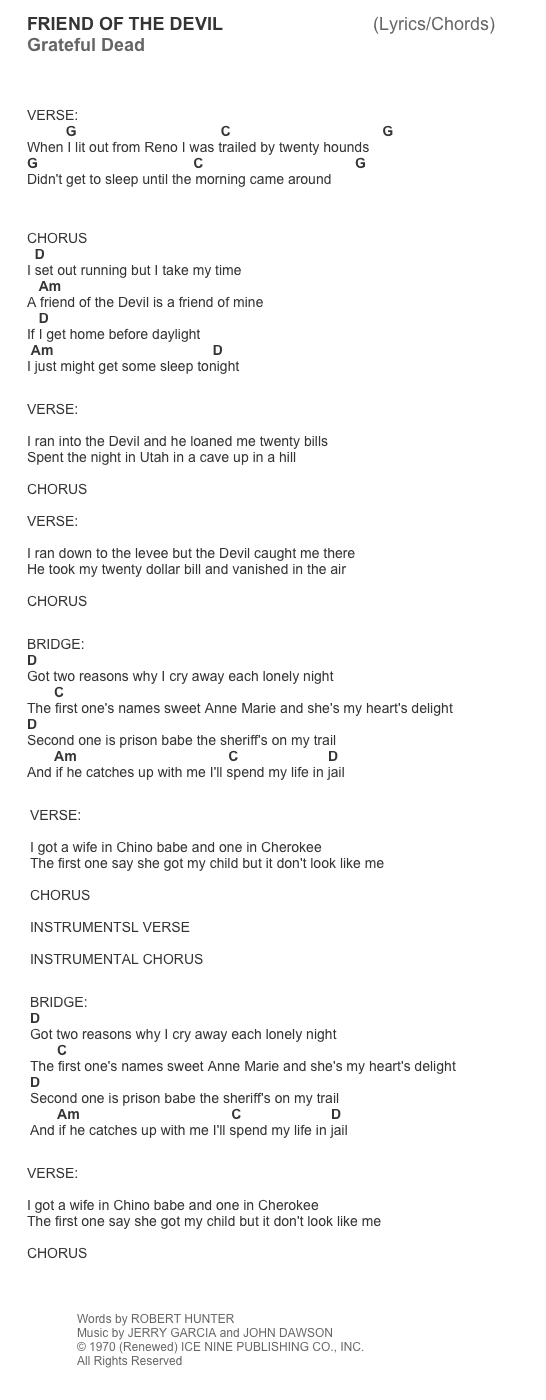
So, we’ve got four chords and now all we need do is come up with a strumming pattern we like (and can easily play) and we’re set. Here is one that should work well with this song. Remember that the “D” stands for “downstroke” and the “U” denotes an “uspstroke:”
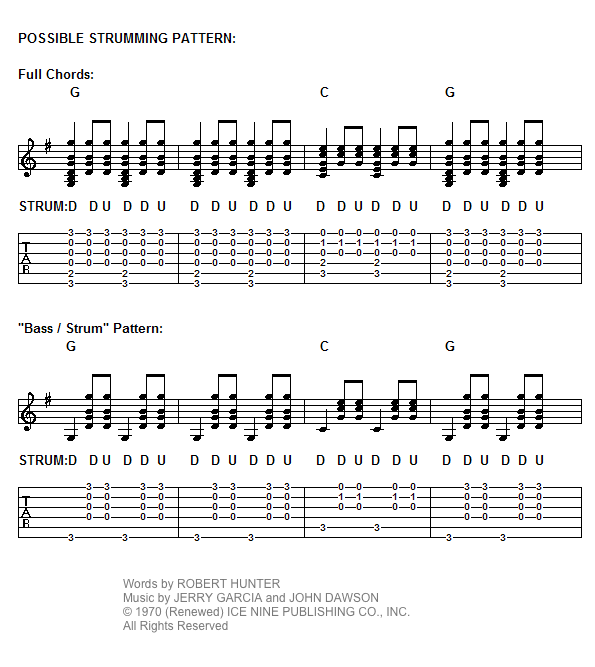
This particular pattern is actually based on the rhythm guitar of the recorded song. With very little practice, you should find it comes easily to your strumming hand. Start with the “full chord” version, strumming a downstroke of the first and third beats and a down and up stroke on the second and fourth beats.
When you feel you’re comfortable with this basic strum, give the “bass / strum” example (also known, believe it or not, as the “boom-chuck” approach) a try. For this pattern you strum just the single bass note on the first and third beats and still do the down and up stroke of the rest of the chord on the second and fourth beats. You’re now able to play this song and add it to your repertoire. End of lesson…
Okay, you know me better than that! After all, at this stage in your guitar playing life, you should be able to get to this point on your own. Having either of these basic patterns as a fall back is a perfect place to start. And if we’re all agreed that, shall we move on?
Can you play a G major scale? Whoa! You’re probably wondering how we jumped to this topic! Fair warning, if you’re someone who does his or her damnedest to stay away from “traditional” things like scales, theory, knowing that the note on the third fret of the A string is actually called “C” and not “just play this,” then I’m going to try to teach you something. Feel free to just go on and “read the pictures” if you will, but everything will be easily explained in the text. So please give it a read at some point if you’re having any troubles.
Back to the matter at hand – Since “Friend Of The Devil“ is in the key of G, it doesn’t hurt to be aware of the G major scale, which is conveniently written out below:
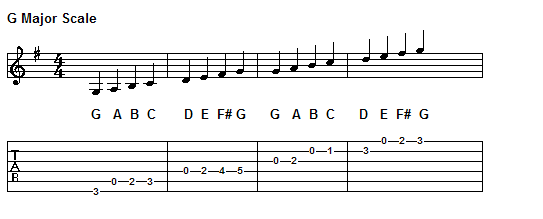
You’ll notice that I’ve placed the G note written on the second line up from the bottom of the staff at two different places on your guitar. You can play it as the open G string and you can also find this note located at the fifth fret of the D string. Hopefully you already know this, of course, from manually tuning your guitar. If not, then consider it a bit of important information worth keeping.
Listen again to the G major scale and then listen to a recording of the song, and you may be able to hear that the “signature guitar riff” is nothing more than a descending G Major scale:
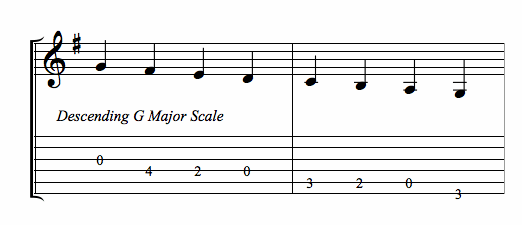
Well, playing just that descending scale seems simple enough. But you should know that some folks will decide that using this descending G Major scale means that you should also go and change the chord names. This will involve using slash chords and will make the “simple” chord sheet look a little more like this complicated (and incorrect) mess:
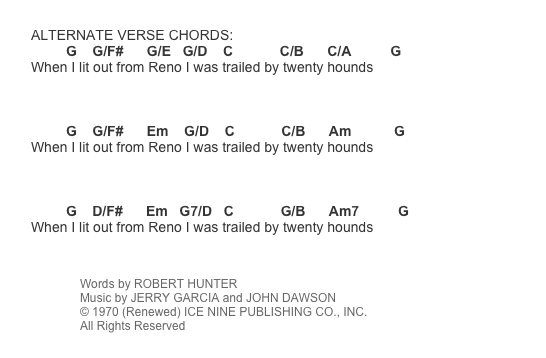
Doesn’t that seem like more than just a bit of overkill? Instead of going overboard, we’re going to just think about the descending scale as “passing tones” and stick to the simple things simple – using the basic G and C chords of the verses and turning them into slash chords simply so that you can keep track of what note of the scale you’re on when you’re playing:
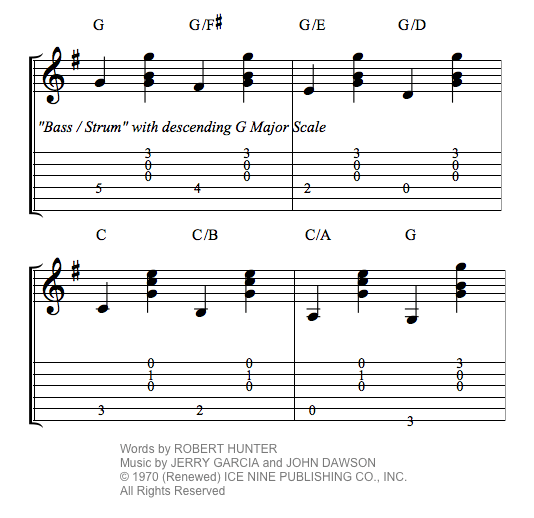
Notice that in this last example you start with the G at the fifth fret of the D string instead of the open G string. You can certainly use either, but when we get into making this basic verse pattern more interesting, you should see (and hear) the advantages. Before doing that, though, this would be a good place to point out that, with a very little bit of concentrated effort, this strumming pattern should be something that you can accomplish in relatively little time. If you use this pattern for the verses and go back to the “bass / strum” pattern for the choruses and bridge, you’ve now got a more complicated arrangement that is still simple for you to play. And you now have another perfectly good arrangement for this song.
But while either of these two arrangements is a great place to start, the true focus of this lesson is to show you how you can “grow” an arrangement and to do that, you’ve got to start with what you know and then add on to it as you learn more, because, at some point, you’re going to be learning more and looking for more.
Let’s say, for instance, that you’ve managed to get a handle on playing simple arpeggios, such as those in the lesson on House of the Rising Sun. Having that under your belt, you might want to take a stab at applying your arpeggio playing to our basic arrangement, much like in the first two lines (“Option A”) of the following example:
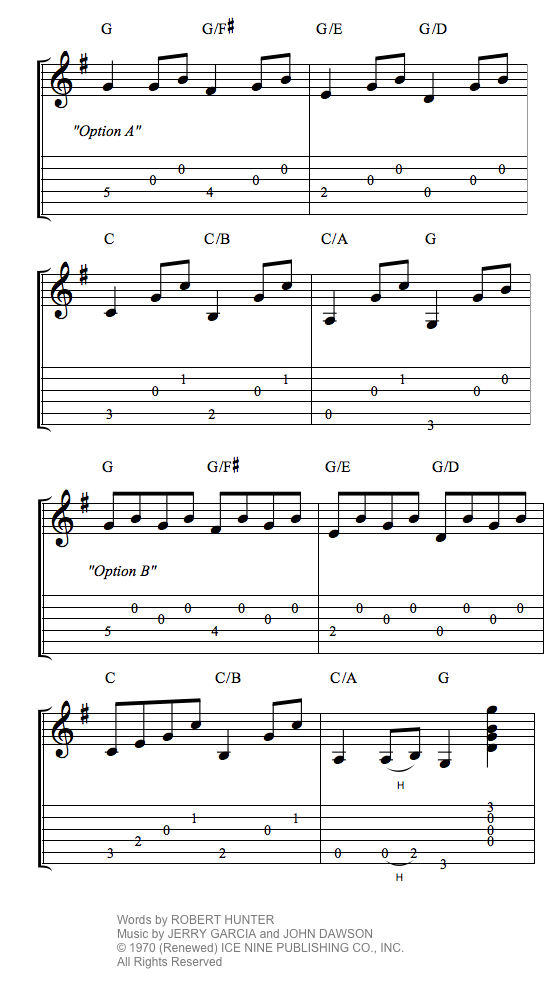
You can hear this first option gives the song a distinctly different character. In order to further demonstrate the simple, yet drastic differences you can make in an arrangement, I played the first “option for verse pattern” with just my fingers and then again using a pick. This simple change in playing provides two very individual feels – the fingers-only approach out sounds very folkish while using a pick smacks of bluegrass. The notes played are exactly the same, it’s just a matter of the method you use to bring those notes to your listener.
Now let’s say that you’ve become a little more adept at picking your arpeggios. Then you might try the second section of this last example, called (appropriately enough) “Option B.” This involves a little more crosspicking than the first section, but with some concentrated effort, it shouldn’t be beyond your capabilities.
Notice the slight variation in the bass line in the final measure, caused by hammering-on from the open A string to the B note at the second fret. While neither of these “options” are taken from the original recording, they both definitely have the feel of the original song. Plus, they sound pretty cool! Adding that full G chord at the end kind of punctuates the end of the phrase, creating some interesting dynamics by giving the song a little more punch.
So now you have three or four ways of playing the verses. That’s not too bad of a start. Shall we take a look at the chorus? Because the verse is so busy with its descending bass line, a return to something simple would be a good first approach to the chorus:
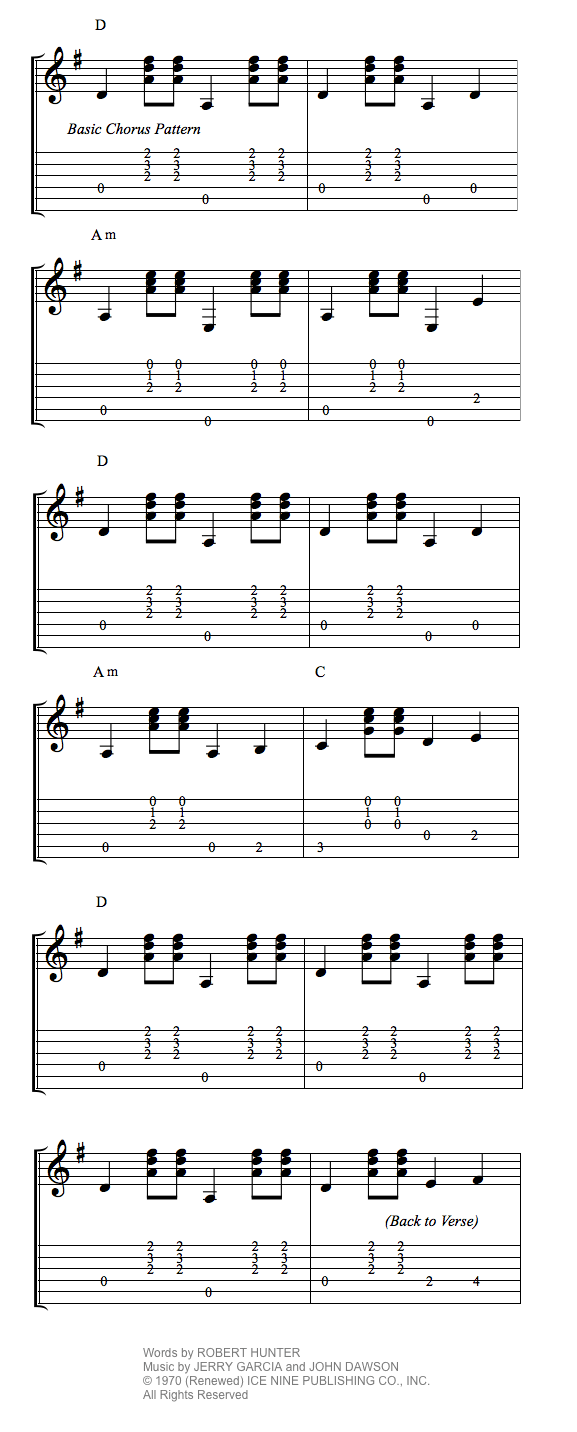
Rather than using a straight “bass / strum” or “boom-chuck” accompaniment, this “basic chorus” employs an alternating bass line, much like that in our Guitar Noise lesson on Margaritaville. Notice that the alternating bass pattern is slightly broken up every other measure, substituting an extra bass note on the fourth beat of the second measure instead of playing the chord. Generally speaking, the third and/or fourth beats of a measure before a chord change are good places to throw in a fill or two and we’re playing a very simple two-note fill here.
An easy variation to this “two note fill” is used for the last measure of D of the chorus. Since this is the last chord before starting the verse again (which begins with a G chord), playing a short ascending bass line makes a lot of sense, In that last measure the third and fouth beats – the E (second fret of the D string) and F# (fourth fret) – lead us back to the G note that starts the picking pattern we’ve been using for the verses.
This is called a “turnaround,” a phrase that you’re probably familiar with from playing the blues. A turnaround is a chord progression or riff that leads the listening back to the song’s beginning chord, which often (but not always) is the home or root chord of the key of the song. The bonus to you, as a player, is that this particular turnaround gets you right in position for the verse pattern.
This arrangement of the chorus is fairly straightforward and shouldn’t give you much more trouble than doing a straight strum of the chords or a typical “bass / strum.” And by now you know that you can certainly add to this arrangement according to your abilities. Let’s say that you’ve been working on your hammer-ons and pull-offs and want to incorporate them more into your playing. Starting with the basic chorus, we can add to it like this:
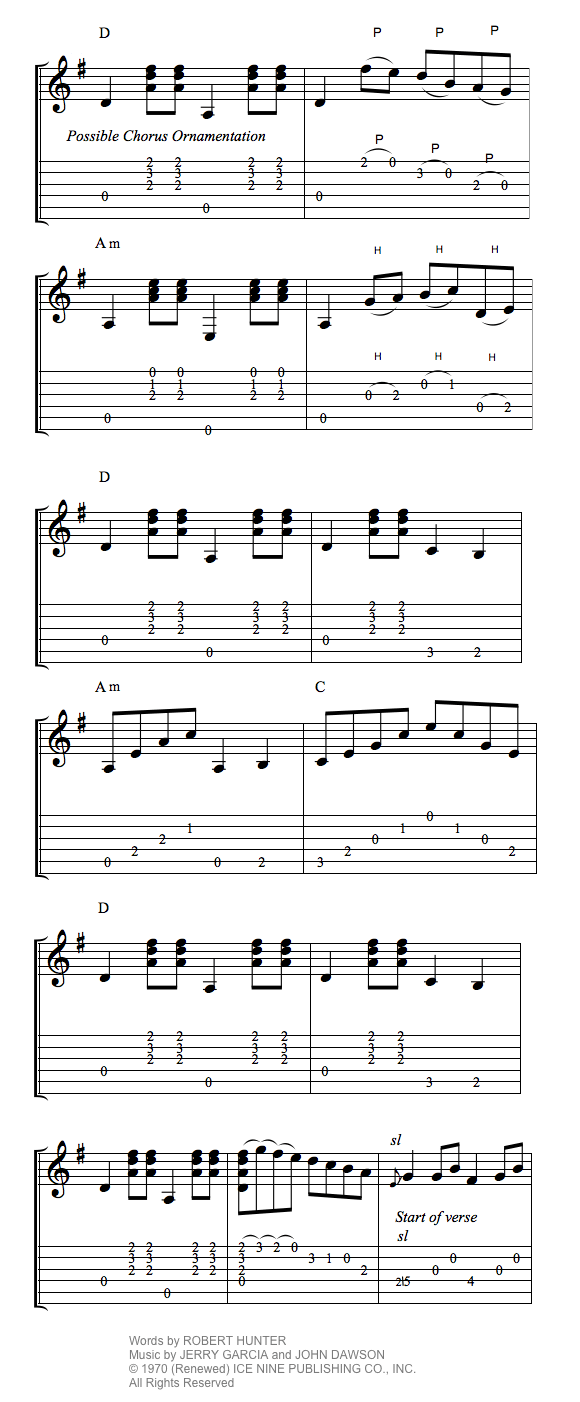
The pull-offs in the second measure and the hammer-ons in the fourth measure are, respectively, all based on the D and Am chords. So playing these doesn’t involve any extraneous finger movement (there’s that liking the simple things again!) Measures six through eight use small walking bass lines along with Am and C chord arpeggios before heading back to our alternating bass pattern D from the basic chorus pattern.
The final measure of this “embellished” chorus contains a different turnaround to get us back to our verse pattern. It’s the flashiest thing we’ve tried so far and, to be honest, is a little more than what I would consider teaching a pure beginner. But what’s learning without a challenge or two? These are just notes of the G major scale, centered around the open D major chord. In the MP3, I’m playing this very slowly and you can hear that I’m using alternating picking to play this. When I get to the final A note (second fret of the G string), I then shift my finger to the second fret of the D string (the E note) in order to slide up to the G note at the fifth fret and once again begin the verse pattern. This slide takes place very quickly. It’s almost like “Oops! I didn’t mean to hit that note! Here’s the note I want!”
Some people might find it easier to slide from the F natural (third fret of the D string) as shown in this example:
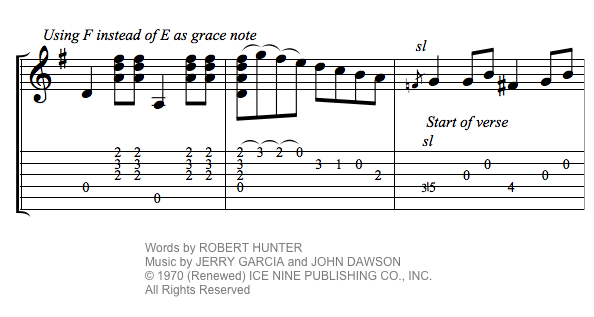
There’s not much of a difference between this two, but they do have very different sounds. So if you decide to use either of these variations of the chorus, take your time to hear which one you like and also experiment and see what fingering works well with you.
Because we’ve been so busy with the verses and choruses, I find the bridge a good place to lay back a little. You can, if you decide to do so, use the basic strumming patterns you learned at the beginning of this lesson. That will sound perfectly fine.
I’ve come up with this arrangement of the bridge, which is recorded painfully slowly on the accompanying MP3 file. You’ll hear it more at speed in the final MP3:
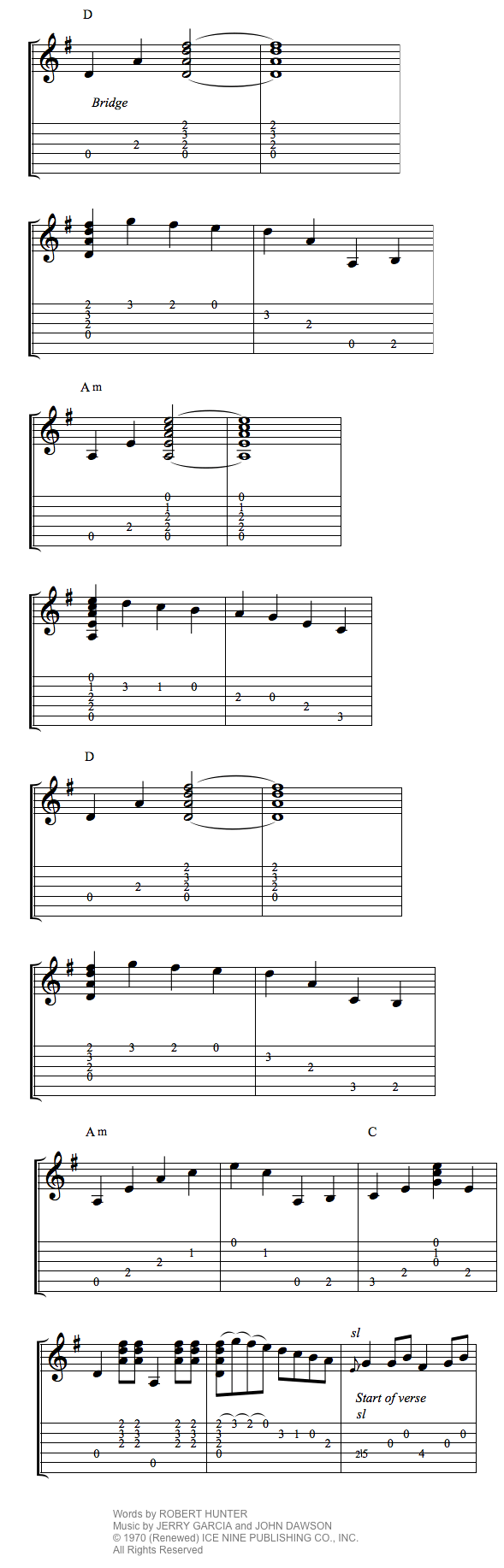
This is pretty much straight quarter note arpeggios up until the very end when it reverts back to the patterns we used in the embellished chorus section.
The song ends with a final verse and chorus and has one of those “unresolved” feelings because D is the last chord. Here’s an MP3, which contains a verse, chorus, bridge and then final verse and chorus. You’ll hear different ideas that we’ve touched upon in this lesson as well as some expansions on these ideas (other arpeggios and staggered rhythms) and also a few genuinely bad clunkers!
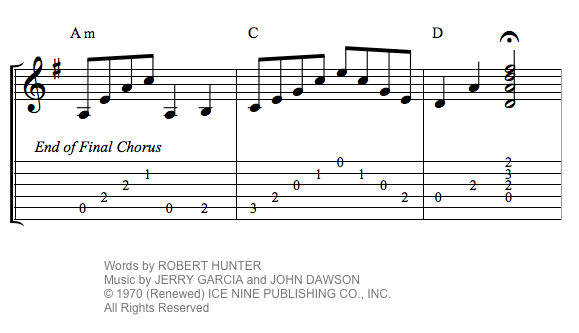
I hope you had fun with this lesson and that you enjoy playing around with this song. I also hope that you understand that, as you grow as a guitarist, you should be able to go back to some of the songs you played as absolute beginner and bring something new to them. A lot of the differences that people perceive as “beginning” or “intermediate” guitarists are simply the ability to make a more interesting strum or to add a little embellishment here and there. Taking the things you’ve learned and applying them to what you already know is one of the best ways to jumpstart this process.
And, as always, please feel free to write in with any questions, comments, concerns or songs (and/or riffs and solos) you’d like to see discussed in future pieces. You can either drop off a note at the Guitar Forums or email me directly at [email protected].
Until our next lesson…
Peace
fabien
October 25th, 2015 @ 3:02 pm
Great lesson! Different arrangements for each parts, vert usefull for every guitarists, regardless your skill…
Greetings and aknowlegments from France!
Patrick
April 26th, 2015 @ 10:55 pm
Great lesson indeed !! Now to work at becoming capable of using ALL while playing the tune. IT WILL create a beautiful song !! Thanks always, Pat
Sam
September 2nd, 2013 @ 7:38 pm
Can you explain what fingering you are using when doing Bass/Strum With Descending G Major Scale?
Lowell
December 21st, 2012 @ 9:15 pm
So glad to see these tabs up. Congratulations, and happy holidys!
Lowell in Florida
Mark
December 9th, 2012 @ 5:32 pm
Good Lesson!