Common Sensei – (or, The Myth of the Self-Taught Guitarist)
What, exactly, does the term “self-taught” mean? Everyone got help of some kind in order to get to whatever level of playing ability he or she currently enjoys.
David Hodge has written over a hundred guitar columns and lessons for Guitar Noise. The complete archive of these guitar lessons is available here. Click through to the last page if you want to read everything in the order it was written.

What, exactly, does the term “self-taught” mean? Everyone got help of some kind in order to get to whatever level of playing ability he or she currently enjoys.

In this first lesson on accompanying yourself with guitar we focus exclusively on using arpeggios to create interesting song arrangements.
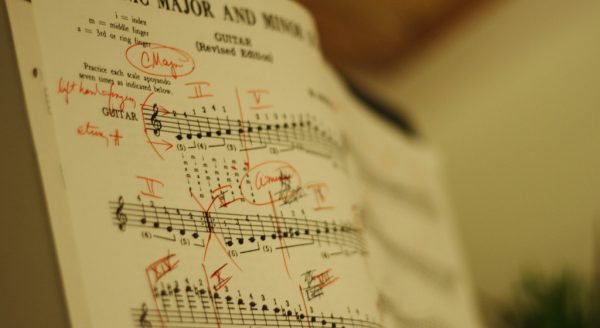
There’s a very simple reason a lot of solos sound more like someone playing scales rather than solos and it all comes down to how you practice. Learn how to solo by learning how to practice soloing.

Some beginners give up on guitar after a short time. David explains why the physical shape of your first guitar may be why your first efforts at playing are more frustrating than they should be.
As the tutorial resources you have at your beck and call get more and more sophisticated, it gets harder to remember that learning guitar is all about playing guitar. That means if you want to be able to play your instrument, you have to go through all the “grunt work” – that means practicing. And for many players the biggest aspect they need to work on is not using their eyes.
If you know how to read notation, specifically the rhythm values of notation, you never have to worry about figuring out strumming patterns because everything is spelled out for you. In this lesson, we’ll use the main guitar parts from Jack Johnson’s song “Taylor” to demonstrate how easy strumming can be.
In our latest lesson in this series, we look at a basic rock progression and examine the choices we can make in terms of scales for soloing. Plus we get a look at the Mixolydian mode as well as discovering a new use for the Dorian.
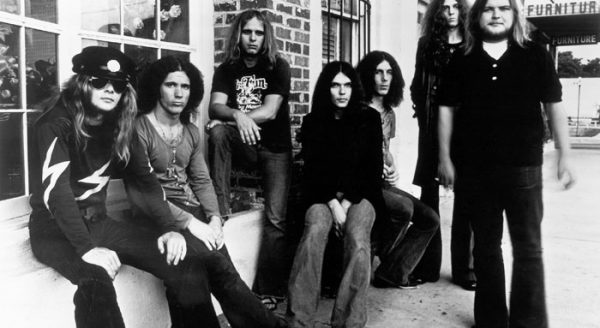
In honor of St. Patrick’s Day, here’s a Celtic arrangement of Lynyrd Skynyrd’s “All I Can Do Is Write About It” done in DADGAD tuning. A wonderful way to remember your home, whether home is in Alabama or Caledonia.
Before moving onward with modes, it’s important to grasp the concept of “target” notes as well as to understand that a target note doesn’t have to be a part of the chord in a chord progression. Here we’ll look at how single notes can used to create far more interesting solos than simply using “safe” notes.